
Digital Property Management in Nigeria: The Platforms Quietly Transforming Real Estate
- Digital Transformation
- 1 day ago
- 6 min read


For a long time, managing property in Nigeria meant managing chaos.
Rent payments collected in cash, recorded in notebooks. Lease agreements stored in physical files that nobody could find when disputes arose.

Service charge collections that turned into monthly confrontations between estate managers and reluctant residents. Landlords living abroad with no reliable visibility into whether their properties were occupied, maintained, or generating the income they were supposed to be generating.
The system worked, barely, because there was no better alternative. That's no longer true. A new generation of Nigerian-built proptech platforms is systematically replacing the manual, opaque, and exhausting process of property management with something that actually functions. And the implications for landlords, developers, and investors are significant.
Why Nigerian-Built Platforms Matter More Than Global Ones
The instinct when looking for software solutions is often to reach for the globally recognised names, and in property management, that means platforms like Yardi, AppFolio, and Buildium, which are genuinely excellent products used by institutional property owners worldwide.
The problem is that these platforms were built for markets with fundamentally different operating realities. They assume stable banking rails, straightforward lease structures, and tenant behaviour patterns that don't map cleanly onto how property operates in Nigeria. Service charge culture, the annual rent payment norm, multi-currency realities, and the specific operational demands of gated estate management, these are Nigerian realities that global platforms treat as edge cases rather than core design requirements.
The most interesting development in Nigerian real estate over the past several years is that local builders have stopped waiting for global platforms to adapt, and have instead built from the ground up for how property actually works here. The results are platforms that solve real Nigerian problems rather than approximating solutions designed for somewhere else.
The Platforms Worth Knowing

OurProperty NG is arguably the most comprehensive of the locally built options, and its design philosophy sets it apart from simpler rent-collection tools. Rather than treating property management as purely a financial transaction, rent in, rent out, OurProperty NG manages the full operational reality of an estate. Gate management, staff coordination, visitor access, security systems, resident communication, and the financial layer of rent and lease management all sit within the same platform.
For estate developers and gated community managers, this integration matters enormously.

The operational chaos of running a medium to large estate, coordinating security, managing service charge disputes, tracking maintenance requests, communicating with hundreds of residents, is exactly what OurProperty NG is designed to systematise. The branded app capability, which allows property companies to deploy the platform under their own identity, gives professional operators a way to present a polished resident experience without building technology from scratch.
Kayapro360 positions itself around data and analytics, which reflects a more sophisticated understanding of what property management actually needs to become as the market matures. Collecting rent is a relatively simple problem. Understanding portfolio performance, which properties are underperforming, where occupancy is declining, what maintenance costs are doing to net yield, how service charge collections compare across estates, requires a data infrastructure that most Nigerian property operations have never had.

Kayapro360 builds that infrastructure. Bulk tenant onboarding, automated lease and rent tracking, audit-level financial reporting, and multi-estate dashboards give portfolio managers the visibility to make decisions based on evidence rather than intuition. For developers managing student housing or large residential portfolios where the volume of individual tenants makes manual oversight impossible, this analytics capability is genuinely transformative.
VENCO focuses specifically on the daily operational reality of residential communities, the dimension of estate management that directly determines resident satisfaction and, by extension, occupancy rates and the estate's reputation. Service charge collection and transparency, visitor access management, gate logging, incident reporting, and resident communication are VENCO's core competencies.

It's a narrower scope than OurProperty NG, but the depth within that scope makes it particularly strong for facility managers and estate management companies whose primary challenge is community operations rather than financial portfolio management.
Capahands addresses one of the most persistent pain points in Nigerian rental property: the trust deficit between landlords and tenants. Rent disputes, payment uncertainty, and the general opacity of the landlord-tenant relationship have historically made rental property management in Nigeria adversarial by default.

Capahands builds transparency into the relationship systematically, automated rent payment processes, tenant verification, clear documentation of what is owed and what has been paid. The commercial logic is that reducing friction and disputes protects both parties and makes the rental relationship more sustainable over time.
Hutstack takes a cloud-first approach that is particularly relevant for the growing category of Nigerian landlords managing properties remotely, whether from another city or from abroad. Centralised portfolio management, tenant and vendor communication, and maintenance coordination accessible from anywhere address the specific challenges of the diaspora landlord or the Lagos investor with properties in Abuja. The geographic independence that cloud-based management enables is becoming increasingly commercially important as property investment diversifies across cities.
Global Tools for Institutional Players
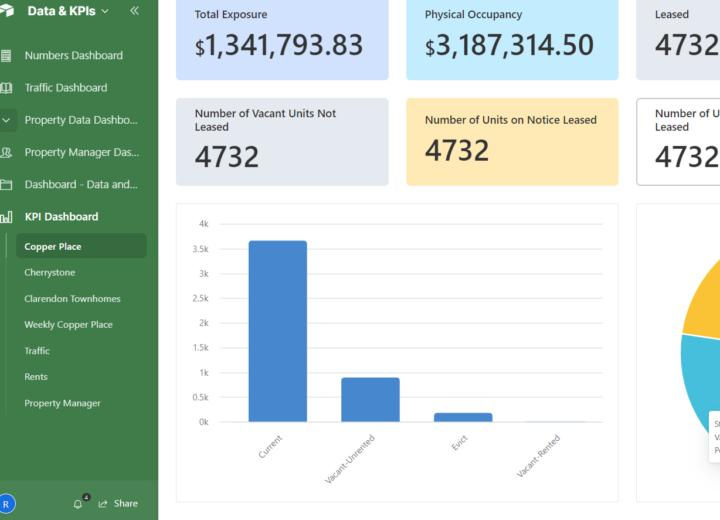
For institutional investors, REITs, and Grade A commercial property owners, the globally established platforms, Yardi, Buildium, AppFolio, DoorLoop, remain relevant. They offer sophisticated lease accounting, owner reporting, maintenance ticketing, and analytics that meet the standards international investors and institutional lenders expect to see.
The practical challenge is integration with Nigerian banking and payment infrastructure, which requires custom work that the platforms weren't designed to facilitate. The businesses using these global tools in Nigeria are typically those with the technical resources to manage that integration, large commercial property companies, internationally backed developers, and operators with portfolios that require institutional-grade reporting standards.
The Distinction That Actually Matters

One of the most useful conceptual clarifications in the Nigerian proptech space is the distinction between estate management and property management, two related but distinct operational challenges that require different platforms.
Estate management is about how a community functions day to day: who enters the gate, how security incidents are logged, how service charges are collected and communicated, how facilities are maintained, how residents interact with management. OurProperty NG and VENCO are designed primarily for this.
Property management is about the financial and administrative relationship between landlord and tenant: lease creation, rent invoicing, payment tracking, maintenance requests, owner reporting. Hutstack, Capahands, and the global platforms focus here.
Some operations need both. A large gated estate with a significant residential rental component needs to manage community operations and financial relationships simultaneously. Understanding which problem is primary, and which platform solves it best, is the key to choosing the right tool rather than the most heavily marketed one.
What This Shift Actually Means
The practical implications of digital property management adoption are significant enough that they deserve stating clearly.
A landlord who previously managed five properties at the edge of their administrative capacity can now manage fifty without proportional increase in overhead.

The work that consumed hours, chasing payments, logging requests, tracking leases, filing documents, becomes automated and systematic. What was previously a ceiling becomes a starting point.
Transparency changes the nature of disputes. When tenants can see exactly what they owe and when, and landlords can see exactly what has been paid and what hasn't, the most common source of conflict in Nigerian rental relationships, disagreement over basic facts, largely disappears. The energy that went into managing disputes can go into managing the property productively.
Data creates strategic advantage. Property owners who understand their portfolio's performance at a granular level, occupancy rates by property type, rent collection rates by location, maintenance cost patterns over time, make better investment decisions than those operating on intuition. This is not a marginal advantage. Over a decade of investment decisions, the compounding effect of data-driven decision-making versus gut-driven decision-making is enormous.
Here’s your section optimized with the focus keyword naturally embedded in both the H2 and body (without sounding forced or spammy):
Where Digital Property Management in Nigeria Is Going
The current platforms powering digital property management in Nigeria already solve many of today’s operational challenges. The more interesting question is what the next generation of Nigerian proptech will look like as capabilities expand.
Full integration with fintech payment infrastructure, moving beyond bank transfers to embedded payment experiences that feel native to mobile commerce, is the most immediate development. As digital property management in Nigeria continues to evolve, AI-powered tenant screening and dynamic rental pricing, already common in more mature markets, are beginning to emerge as local data infrastructure improves. Smart estate systems, IoT-enabled access control, automated facility monitoring, and energy management integration, will become standard features in new premium developments rather than differentiators.
Looking further ahead, digital property management in Nigeria will likely become part of fully integrated real estate ecosystems where search, transaction, management, and eventual resale exist within connected platforms rather than fragmented processes. The entire property journey, finding it, buying it, managing it, and selling it, will become as seamless as the best digital consumer experiences. While this level of integration is still developing, the foundational infrastructure is already being built.
Nigeria is not simply catching up to global models. Through digital property management in Nigeria, the market is building systems tailored to its own realities, at a pace driven by real commercial need. Landlords and developers who understand what these platforms make possible, and adopt them intentionally, will manage more efficiently, scale faster, and build more valuable property businesses than those still relying on manual systems.
The infrastructure is here. The real question is who will leverage digital property management in Nigeria effectively.


Comments