
Future-Proof Real Estate in Nigeria: How to Identify the Properties That Will Still Matter in 15 Years
- Digital Transformation
- 2 days ago
- 7 min read


Most people who lose money in Nigerian real estate don't lose it because they bought property. They lose it because they bought the wrong property, one that looked compelling at the time of purchase but failed to hold its value because it was built on assumptions that didn't survive contact with reality.
The difference between a real estate investment that compounds over a decade and one that stagnates or deteriorates isn't usually luck. It's a specific set of characteristics that distinguish properties built for lasting relevance from those built for the current moment. Understanding those characteristics, and learning to evaluate them before committing capital, is what separates serious real estate investors from people who got fortunate or unfortunate depending on the cycle.
Here is how to think about it.
Location Is About the Future, Not the Present

The single most reliable driver of long-term real estate value in Nigeria is not where a location is today, it's where it will be in ten to fifteen years. And that trajectory is largely determined by infrastructure.
The Lekki-Epe corridor is the clearest current example of this principle in action. The combination of the Lekki Deep Sea Port, the Dangote Refinery, and the expanding road network along that axis is creating the conditions for sustained commercial and residential growth that will compound over decades. Investors who positioned themselves in that corridor five years ago, when many of the infrastructure projects were still years from completion, made decisions that are looking increasingly prescient.
The same logic applies to other corridors that are earlier in their development trajectory. The proposed Fourth Mainland Bridge, if and when it materialises, will reshape the value map of significant portions of Lagos. Abuja's expanding satellite town corridors are attracting population and commercial activity that infrastructure investment follows rather than precedes. The question to ask about any location isn't "is this desirable now?", it's "what will this location look like when the infrastructure that's currently planned or under construction is complete?"
This requires reading beyond real estate marketing materials. Government master plans, infrastructure project announcements, and transport planning documents are the source material for making these assessments. The investors who do this research systematically consistently identify value before it becomes visible to the broader market.
Smart Planning Is No Longer a Premium Feature, It's a Survival Requirement

Nigeria's infrastructure challenges are well-documented: unreliable power, water supply inconsistency, waste management gaps, security vulnerabilities. For most of the country's history, residents and businesses accepted these challenges as background conditions and worked around them.
That tolerance is changing. As urban populations grow and alternatives multiply, properties that require residents to personally solve infrastructure problems, running generators for basic electricity, buying water from tankers, managing security independently, are becoming less attractive relative to developments that solve these problems collectively at the estate level.
Master-planned developments with reliable solar or hybrid power systems, functional water treatment, integrated waste management, fibre connectivity, and professionally managed security aren't just more comfortable to live in. They are structurally more resilient as investments, because they remain attractive to a broader pool of potential buyers and tenants regardless of what's happening with public infrastructure around them.
When evaluating any development for long-term holding, the question to ask is: if public infrastructure in this area deteriorates further over the next decade, will this property's value be protected by its own systems? Properties that answer yes to that question have a fundamental resilience that others don't.
The Developer Is Part of the Investment

This is the dimension of Nigerian real estate investment that gets underweighted most consistently, and it's one of the most important.
A property is only as good as the organisation that built it, maintains it, and stands behind it. In a market where developer quality varies enormously, from internationally backed institutions with decades of track records to recently incorporated entities with ambitious marketing and limited execution history, the ability to assess developer credibility is a core investment skill.
The relevant evidence is not what a developer says about itself. It's what they have built, how those buildings have aged, and what the residents of their previous projects say about their experience. Visit completed projects. Walk the common areas. Talk to residents about what works and what doesn't, about whether the developer responded to problems after handover, about whether the property has maintained its quality over time. This information is available to anyone willing to do the fieldwork, and it is far more reliable than any marketing material.
The documentation dimension is equally critical. Projects with clear title documentation, all relevant approvals, and transparent legal structures are fundamentally different investments from those where these elements are promised rather than present. In Nigeria's regulatory environment, a property without clean documentation is not just a legal risk, it's a potential total loss. Verify everything independently, through a lawyer who works for you rather than the developer.
Demand Should Be Identifiable, Not Hypothetical

There is a category of Nigerian real estate development, typically in remote or emerging locations, positioned as luxury or premium, where the investment thesis depends on a future demand that doesn't yet clearly exist. The marketing narrative is compelling: this area will become the next Victoria Island, the next Maitama. It might. But "might" is not a sufficient foundation for a serious long-term investment.
Future-proof properties are built on identifiable, present demand from clearly defined user groups. Young professionals in Lagos who need quality rental accommodation within reasonable commuting distance of commercial centres. SMEs that need well-managed commercial space in growing business districts. Middle-income families in urban corridors who are priced out of island markets but need quality housing close enough to employment. These are real demand pools with verifiable characteristics, you can visit the locations, count the potential users, understand their purchasing power, and assess whether the proposed development actually serves their needs at a price point they can sustain.
Mixed-use and medium-density developments that serve these real demand pools tend to perform better through economic cycles than speculative luxury developments in emerging locations, precisely because their occupancy is based on genuine need rather than speculation about future desirability.
Climate Resilience in Future Proof Real Estate in Nigeria

This is a consideration that many Nigerian real estate investors still treat as a future concern rather than a present one. It shouldn't be. Climate resilience is becoming an essential component of future proof real estate in Nigeria, particularly in coastal cities like Lagos
Lagos is a coastal city with significant low-lying areas, and climate change is not a distant forecast, it is an observable reality in the flooding patterns that have intensified over the past decade. Properties in flood-prone areas that lack adequate drainage infrastructure have already experienced value impacts, and the trajectory of climate risk over a fifteen-year investment horizon only moves in one direction.
Future-proof developments account for this through proper drainage engineering, elevated road networks, flood mitigation structures, and site selection that prioritises areas with lower climate exposure. Green building features, solar-ready infrastructure, energy-efficient design, water recycling systems, are becoming commercially relevant not as environmental statements but as practical cost management for residents and a genuine differentiator for developers who understand where market expectations are heading.
When evaluating a development for long-term holding, ask specifically: what has the developer done about flood risk? What is the drainage infrastructure? Has this site experienced flooding in recent years? These are due diligence questions, not abstract environmental concerns.
Regulatory Alignment Protects Everything Else
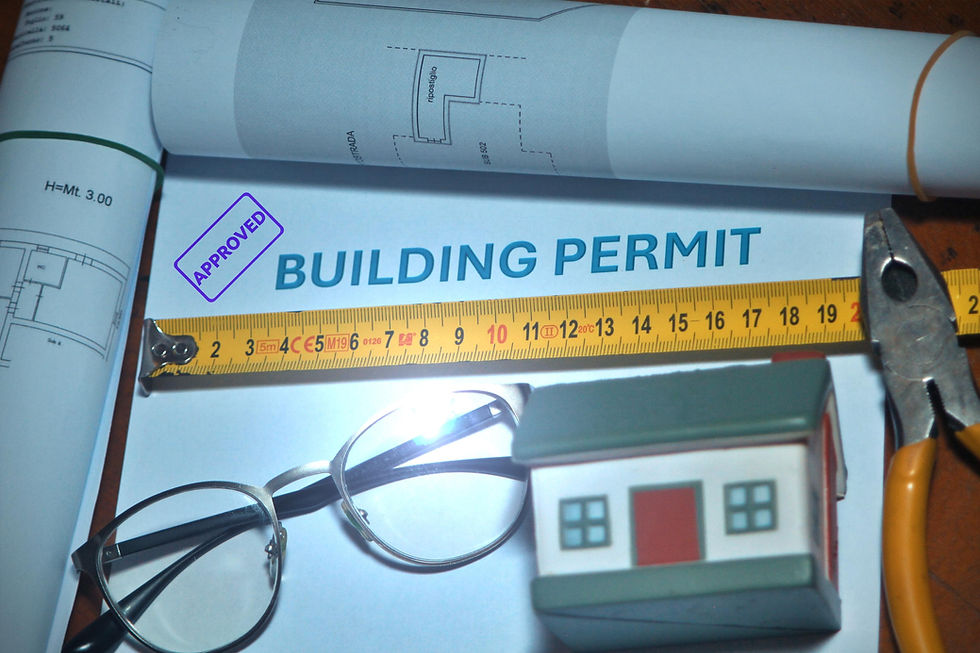
The Nigerian real estate market has a history of demolition events, government actions that have wiped out significant investments because the underlying properties were built without proper approvals, in restricted zones, or on disputed land. These events are not random. They are the predictable consequence of buying without adequate regulatory due diligence.
Future-proof investments sit within approved master plans, in designated development zones, with all relevant governmental approvals documented and verifiable. They are not in flood plains that have been earmarked for environmental protection. They are not in right-of-way areas that future road projects will require. They are not built on land with unresolved ownership disputes.
Verifying this requires more than taking the developer's word for it. It requires independent searches with the relevant land registries, verification of planning approvals with the appropriate government agencies, and legal opinions from qualified professionals who are working in your interest. This diligence is not optional for serious long-term investment, it is the foundation that everything else rests on.
Always Know How You Will Exit

A final question worth asking about any real estate investment before committing capital: if you needed to sell this in three to five years, how difficult would that be?
Properties in high-demand corridors with established rental markets and demonstrable capital appreciation histories are liquid in a relative sense, there is an active pool of potential buyers and the transaction can be completed in a reasonable timeframe. Properties in speculative locations with thin secondary markets and uncertain demand can be extremely difficult to exit at a reasonable price, regardless of what the original purchase price implied about future value.
The liquidity question also points to the importance of price positioning. Mid-market and affordable properties in growing corridors typically have deeper pools of potential buyers than ultra-luxury developments, which means better liquidity, more stable occupancy if held for rental, and better resilience to economic cycles when buyers become more price-sensitive.
The Underlying Logic
What connects all of these considerations is a single underlying principle: future-proof real estate is property that will still be solving a real problem for real people in fifteen years. The fundamentals, infrastructure alignment, genuine demand, developer credibility, climate resilience, regulatory clarity, and exit liquidit, are different facets of the same question.
Nigeria's urban growth story is real. Cities will expand, populations will grow, and the demand for well-designed, well-located residential and commercial property will increase substantially over the coming decades. The investors who will benefit most from that growth are not those chasing the most exciting current opportunity, they are those identifying the properties that will still be in demand when everyone else catches up.
That is what future-proof investing looks like.


Comments